Argan oil is one of Morocco’s best-known products, and a popular gift to bring home. The argan tree grows naturally in the south-west of the country, and the oil is still made by hand in many villages.
This guide explains what argan oil is, the difference between culinary and cosmetic oil, and how to buy with confidence.
The argan tree is native to a region of south-west Morocco, and its forest is recognised as a biosphere reserve. You may even see goats climbing the trees to eat the fruit, a famous sight on the roads of the region.
Culinary argan oil comes from roasted kernels and has a nutty flavour, and it is used on bread, salads and couscous. Cosmetic argan oil comes from unroasted kernels and is used on skin and hair. Check the label to know which one you are buying.
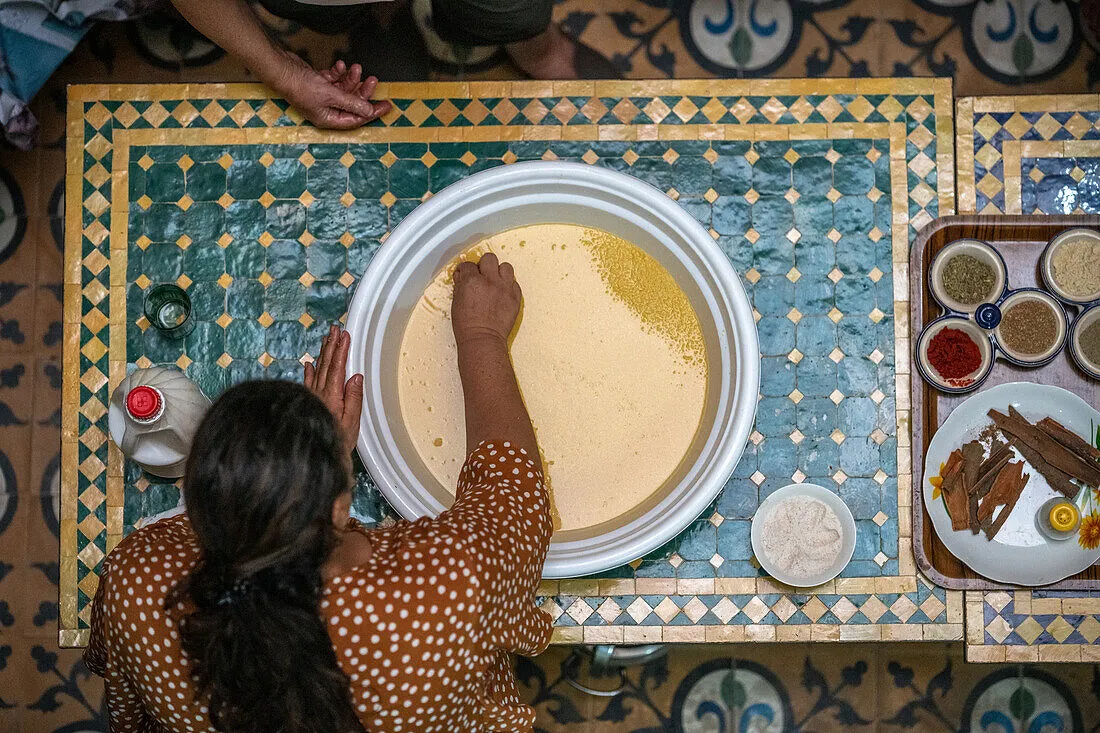
Many cooperatives are run by local women, who crack the nuts by hand and press the oil. Visiting one gives you a real insight into the craft, and your purchase supports local families.
Choose pure oil, ideally cold-pressed, in a dark glass bottle with a clear label, and buy from a cooperative or a trusted shop. If the price seems far too low or the label is vague, be cautious. Our Marrakech souks shopping guide and rugs buying guide share more shopping tips.
Use culinary oil in small amounts, and cosmetic oil on skin and hair. Pack bottles carefully in your luggage, and check airline rules on liquids. Plan your route with our 7, 10 and 14-day itineraries.
An oil pressed from the kernels of the argan tree, which grows in south-west Morocco.
Culinary oil is made from roasted kernels, cosmetic oil from unroasted kernels.
From a cooperative or a trusted shop, ideally with a clear label.
Yes, they are a well-known sight in the argan region.
Yes, but pack it well and check airline liquid rules.
Our private guides can take you to trusted cooperatives and workshops, away from the crowds.
Plan Your Trip