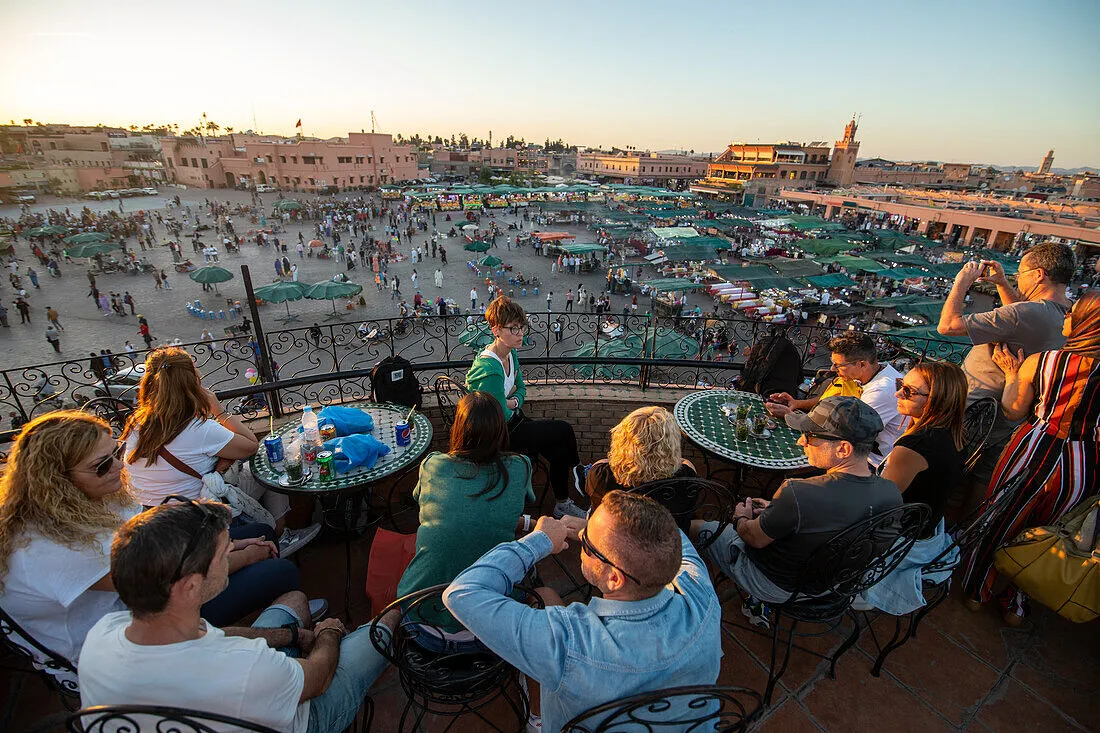
Ramadan is the Islamic holy month of fasting, and in Morocco it changes the rhythm of daily life. Visiting during Ramadan is possible and can be rewarding, as long as you know what to expect.
This guide explains how Ramadan affects travel, food and sightseeing, and how to be a respectful guest.
Many people fast between dawn and sunset, so mornings and afternoons can be calm. After sunset the breaking of the fast, called iftar, brings families together and the streets come alive again.
Some local cafes and restaurants close during the day or open late. Hotels, riads and many tourist-oriented places continue to serve visitors. Traditional dishes at iftar often include soup, dates and sweet pastries, and you can read more in our guide to traditional Moroccan food and the Moroccan mint tea guide.
Monuments, markets and shops may keep shorter or different hours, so it helps to plan with local knowledge. A private driver-guide can arrange your days around the opening times.
Out of courtesy, avoid eating, drinking or smoking in public during the day, and dress modestly. Our etiquette and culture tips and the Moroccan culture guide give more background.
The end of Ramadan is celebrated with Eid al-Fitr. Some businesses close for a few days, and transport can be busy, so book ahead if you travel around then.
Yes. Many visitors travel during Ramadan, with some adjustments to meals and opening hours.
Hotels, riads and many tourist-oriented restaurants stay open. Some local places close or change hours in the daytime.
No, but out of respect avoid eating, drinking or smoking in public during the day.
The dates move about 10 to 11 days earlier each year, so check the current dates before you plan.
The meal that breaks the fast at sunset, often starting with dates and soup.
Tell us when you plan to travel and we will shape your days around the rhythm of Ramadan, with a private driver-guide and well-chosen stops.
Plan Your Trip