Moroccan architecture is one of the great pleasures of a visit. Courtyards, fountains, carved plaster and mosaics of coloured tile turn every building into a work of craft.
This guide explains the main elements and where to see them.
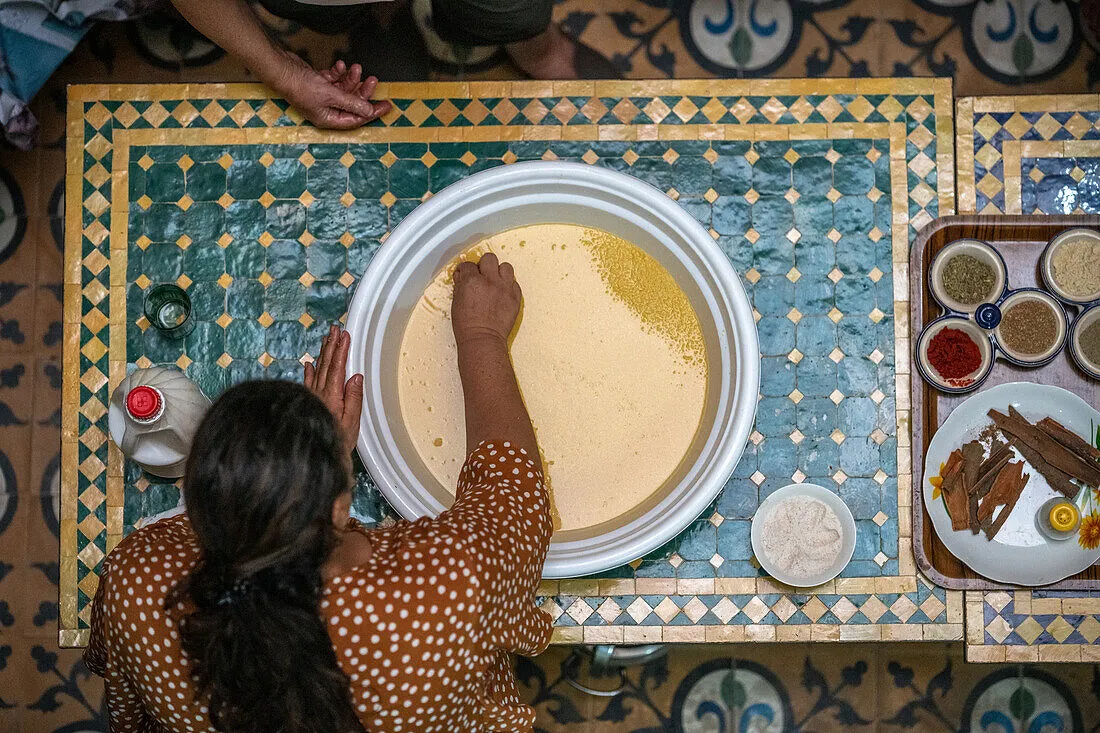
Zellige is a mosaic of small glazed clay tiles, cut by hand and assembled into geometric patterns. Artisans in Fes have practised it for centuries, and it covers fountains, walls and floors in riads and palaces.
Intricate carved plaster, painted cedar ceilings and polished tadelakt walls give interiors their character. Tadelakt, a smooth lime plaster, is often used in bathrooms and hammams.
The inward-looking courtyard is the heart of the traditional house, bringing light, air and calm. Learn more in our guide to what a riad is and our guide to what a kasbah is.
In Fes, the Bou Inania Madrasa is a highlight, and in Marrakech the Ben Youssef Madrasa, Bahia Palace and Saadian Tombs show the style at its finest. See Ait Ben Haddou for earthen architecture in the south, and our Fes medina guide.
Most mosques are closed to non-Muslims, but madrasas, palaces and many historic sites are open. Dress modestly and ask before taking photos of people. See our guide to Moroccan culture.
A traditional Moroccan mosaic of hand-cut glazed tiles arranged in geometric patterns.
In madrasas, palaces, mosques and riads across Fes, Marrakech, Meknes and Rabat.
A polished, waterproof lime plaster used on walls, baths and hammams.
Usually not, with a few exceptions. Madrasas and palaces are generally open.
Yes, a local guide explains symbols, patterns and history that are easy to miss.
Our private guides can design a route around the finest palaces, madrasas and riads, at an unhurried pace.
Plan Your Trip